

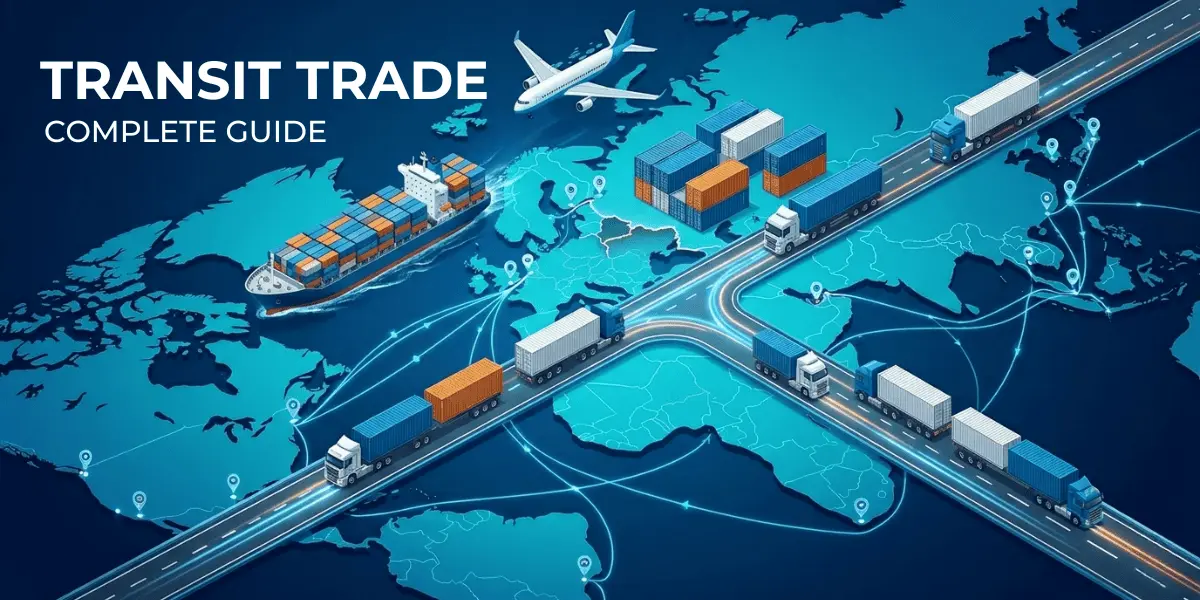
Transit commerce refers to the transportation of goods from one country to another. Simply put, transport commerce occurs when a shipment travels across a middleman nation while being traded and eaten. The commodities merely pass through the country’s landmass, highways, maritime ports, or airports on their journey to their eventual objective. This procedure is frequently utilised in global logistics to accelerate, reduce costs, and improve the efficiency of international shipments.
The transit industry is critical to global trade, particularly for nations with land borders and no maritime links. These countries largely rely on neighboring transit countries to get commodities into and out of their borders.
How does transit trade work?
Transportation commerce is a systematic, officially regulated process.
1. Origin Country
The commodities have been organized, packaged, and recorded in the country of delivery. When shipment, all necessary documentation, including the trade payment receipt, shipping roster, and transportation authorization, is prepared.
2. Entry into Transit Country
The shipment reaches its destination nation via a border checkpoint, harbour, or airstrip. Customs agents seize the freight and obtain immigration approval, ensuring the products simply pass through and are not distributed nationwide.
3. Transportation Through Transit Territory
Roadways, sea, air, or rail move commodities. At this point in the process:
- Customs is still monitoring the package.
- The container in question might have an observation seal or a technology observation instrument applied.
- The freight cannot be moved, removed, or changed before authorization.
4. Exit from Transit Country
After passing through the transport passageway, immigration officials at the exit location examine paperwork, examine labels, and then process the goods for release.
5. Arrival at Final Destination
The package arrives in the nation from which it was imported and goes through standard international duties prior to being shipped to the eventual customer.
Throughout the trip, the items flow seamlessly, lawfully, and safely between various countries.
Why is Transit Trade Important?
Transport trade has several business and physical advantages:
1. Enables Landless Areas
Countries without land borders, such as Afghanistan, Nepal, and countries in Northern Asia, rely on transit routes between neighbours to conduct international commerce.
2. Improves local connectivity.
Transit commerce strengthens geographic linkages and facilitates the flow of goods throughout economies, resulting in increased bilateral commerce.
3. Cuts transport costs.
Using shorter, more efficient travel routes can substantially reduce freight transit time and costs for both producers and customers.
4. Creates revenue for transit countries.
Passage firms assemble:
- Transportation fees
- Fees associated with commuting.
- Shipping costs for shipping
- Transportation expenditures
The funding supports infrastructure investment and promotes job creation.
Transportation restrictions.
Despite the advantages it provides, mobility economics brings several challenges:
1. Customs procedures
Shipping products requires extensive documentation and management oversight. Minor errors may result in difficulties.
2. Security hazards
Packages must be safeguarded and monitored to prevent theft, illicit activity, and tampering.
3. Governmental or territorial Conflict
Transporter trade depends on healthy intergovernmental relations. Crossings and changes to policy could hinder transport routes.
4. Technological constraints
Poor roadways, congested warehouses, and delayed customs clearances all may lengthen transit times and reduce production.
Benefits of a Good Transit Trade Logistics Provider
Professional transportation organizations facilitate the transport procedure by providing:
- Help with transportation documents.
- Ports communication
- Protected transport networks
- Warehouses and secured storage
- Routing Strategies and Managing Risks
- Present-day shipping surveillance
These facilities ensure that goods flow smoothly and on schedule through intermediate nations.
Conclusion
Transit commerce is an important feature of international shipping because it enables goods to flow efficiently across borders, particularly between nations that lack access to the ocean. It improves geographic connectivity, drives revenue, and facilitates global commerce. Despite customs processes and potential hurdles, a professional supply chain partnership can help firms manage cross-border activities efficiently. Transit-based commerce, when properly planned and supported, offers opportunities for faster, more secure, and more cost-effective global economic opportunities.
1 comment on “What Is Transit Trade: A Complete Guide”