

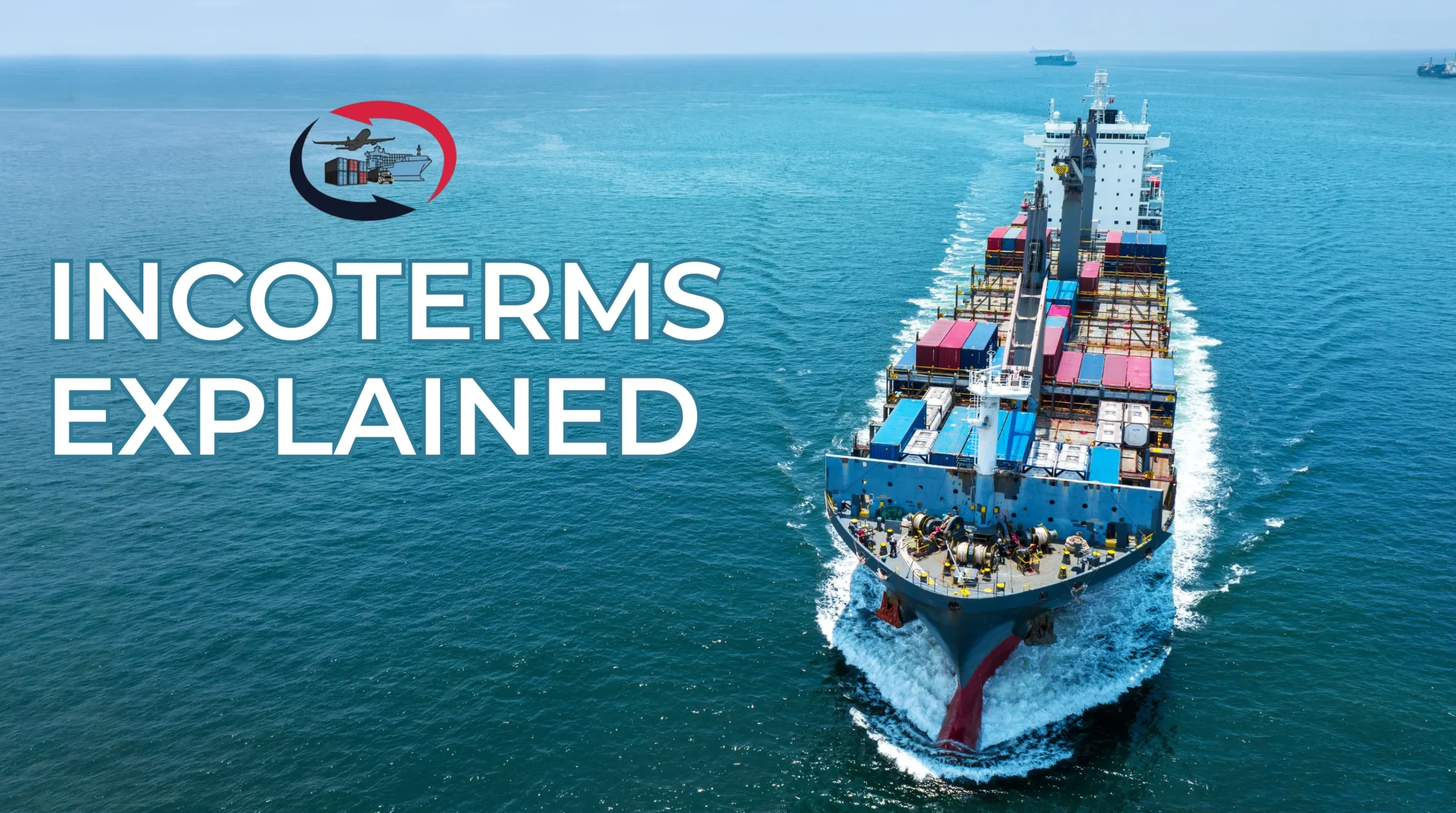
Incoterms: Simply Explained
When it comes to shipping goods to international customers, your sales contract needs to answer three important questions: Who pays for shipping insurance or duties, where and when delivery happens and whether the buyers must collect the goods aboard ship.
This is why a clear understanding of incoterms is essential.
What are Incoterms?
Freight incoterm are the standard terms used in sales contracts for importing and exporting. They are used to define responsibility and liability for goods over the course of a shipment. In other words, they spell out when responsibility for the goods transfers from the supplier to the buyer. They also define who pays which costs for the goods and their transport.
List Of All Inco terms
Incoterms for any mode of transport
1. EXW (Ex work): The seller’s responsibility is to make the goods available for pickup at the warehouse or factory. From that point forward, the buyer assumes responsibility for all costs and risks. For importers and exporters, this means working with a freight forwarder that arranges the entire shipment, starting at pickup from the factory.
2. FCA ( Free Carrier): The seller is responsible to deliver goods to a carrier or another person chosen by the buyer at the seller premises or another specified place.
3. CPT ( Carriage Paid To): The seller is responsible for the costs of transporting the goods to a named destination. Responsibility transfers to the buyer once the goods are delivered to the agreed upon destination.
4. DAP (Delivery At Place): Seller delivers when goods are placed at the buyer’s disposal on arriving transport, ready for unloading at the named destination.
5. DPU (Deliver at Place Unloaded): The seller is responsible for arranging the shipment and delivering the goods to a named place. They are also responsible for unloading them. Risk transfer to the buyer once the goods are unloaded.
6. DDP (Delivery Duty Paid): Sellers deliver to the named place in the buyer’s country, including customs formalities and paying duties and taxes; ambiguity may exist on whether tariffs are included as duties.
Incoterms for sea and inland waterway transport only
7. FAS (Free Alongside ship): The seller is responsible for picking up the goods at the factory, clearing them for export and delivering them to the departure location, usually the ship loading dock. Tick transfers to the buyer when the goods are placed alongside the ship; they are responsible for the main leg of transit and every other step in delivery.
8. FOB (Free On Board): Seller pays costs and freight to destination port risk transfers once goods pass ships rail at port of shipment.
9. CFR(Cost and Freight): The seller is responsible for transporting to the port of origin and for loading the goods onto the vessel. They are also responsible for transportation to the destination port but they are not liable for that portion of the journey. Instead, risk transfers to the buyer when the goods are boarded at the origin port.
10. CIF (Cost, Insurance and Freight): Similar to CFR, with sellers also paying for insurance against the buyer’s risk during transit.
FAQ`s
What are Incoterms in shipping?
Incoterms are internationally recognized trade rules that define the responsibilities of buyers and sellers during international shipments.
What does Icoterms mean?
Incoterms Stand for International Commercial Terms, a standardized set of rules created by the International chamber of Commerce.
Which Incoterm is best?
There is no single best Incoterm. The right choice depends on the shipment, destination and the responsibilities agreed upon by the buyer and seller.
Conclusion
Incoterms are standardized terms used in sales contracts to help exporters and buyers clarify responsibilities for cost, logistics and risk transfer. They don’t replace a full contract or cover payment terms and title transfer. But using the right Incoterm, with a clearly defined delivery place, helps prevent disputes, delays and surprising costs.