

Introduction
Transporter and distributing industries are crucial in linking businesses all over the world. The non-shipping functioning independent carrier (NVOCC) is a noteworthy player in this business. NVOCCs do not own or control their own ships, but they have a responsibility to make certain that items flow conveniently across borders everywhere in the world. They act as service providers between shoppers and large water-based logistics industry firms, delivering legitimate, cheap, dependable, and helpful shipping options to business entities of all kinds. In today’s globalised world, NVOCCs have evolved as an important aspect of worldwide commerce and distribution.
What is NVOCC?
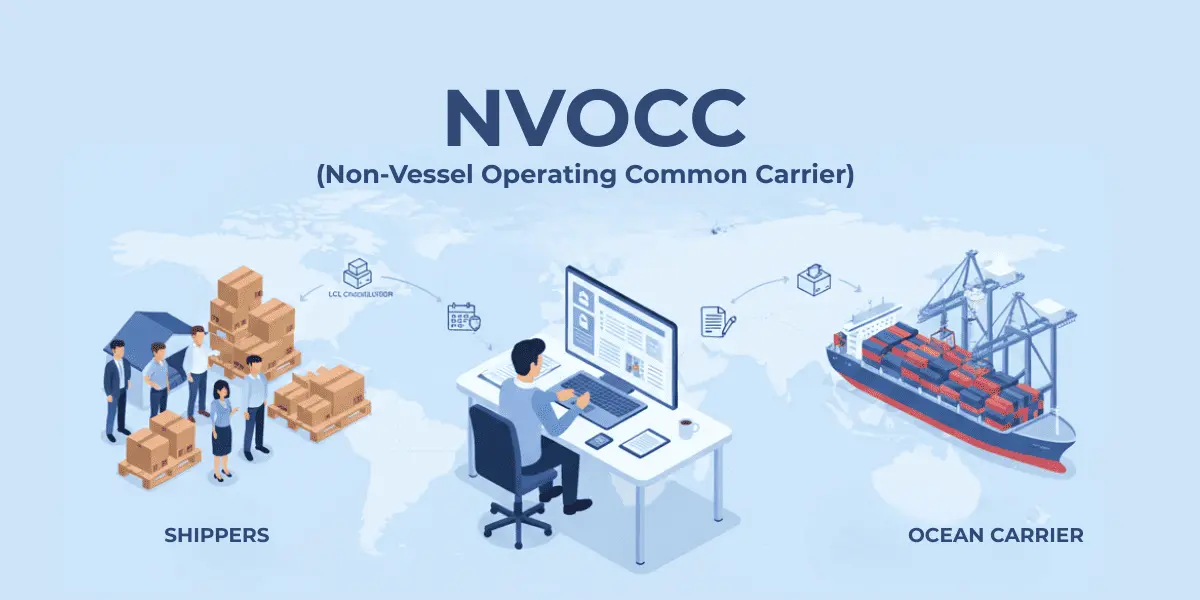
The NVOCC acts as a distributor, facilitating small and medium-sized businesses to move products overseas rather than having to deal personally with large freight corporations. It enables freedom of movement, manages record keeping, and governs all of the intricate nuances of cross-border commodity transfers.
How NVOCC Works?
An NVOCC’s working method is made up of several steps, all of which are designed to make conveyance more readily available to the user. Commonly, it works like this:
Booking and Space Reservation
The NVOCC collects cargo applications from various clients and reserves capacity on an ocean carrier’s shipping container. By pooling shipping data, the NVOCC may negotiate increased freight rates.
Issuing the Bill of Lading
After the cargo booking is validated, the NVOCC issues the shipping company its own parliamentary bill of transportation (HBL). This form acts as both a statement of consent and an intermediary arrangement between the company that ships and the NVOCC.
Arranging Transport and Documentation
The NVOCC is in control of the whole process, from receiving the product to shipment, customs clearance, and transportation to the terminal. It also checks that every piece of transport and visa documentation is correct.
Coordination with Ocean Carriers
The NVOCC works personally with vessel owners to obtain accommodation onboard ships through the Master Bill of Shipment. It ensures that the baggage has been packaged, tracked, and transferred safely to the ultimate port.
Delivery and Deconsolidation
Once the cargo reaches the desired location, the NVOCC oversees decompression procedures (if it is an LCL consignment) and ensures that the items are delivered to the purchasers in the final terminating country.
Role of NVOCC in Global Trade
The importance of NVOCCs in international trade shouldn’t be overemphasised. They function as the connection between enterprises and the worldwide transportation network.
Facilitating Trade:
NVOCCs allow even small and medium-sized enterprises to export globally without having to enter into direct relationships with large companies.
Cost-Effective Solutions:
NVOCCs allow companies to save money on shipping by combining numerous small packages into a single container (known as LCL – Less than a Container Load).
Global Connectivity:
NVOCCs have a vast array of agents that allow them to effectively coordinate the shipment of cargo across different areas.
Simplifying Complexity:
- They manage every administrative complexity, such as paperwork, immigration clearance, and sending surveillance, which allows firms to spend on their respective positions’ core operations.
- In summary, NVOCCs play a necessary role in promising flawless cargo movement, specifically for enterprises that demand adaptable and trustworthy around the globe journey services.
Services offered by NVOCC
Sophisticated NVOCCs offer a wide variety of transportation and freight services. Some examples are:
Container Leasing and Management
Many NVOCCs lease cargoes and oversee their transportation between ports and customers.
Freight Consolidation and Deconsolidation
They consolidate several tiny deliveries into one large carton for shipping (consolidation) and then disconnect them following destination (deconsolidation).
Documentation Services
They create bills of conveyance, create cargo documents, and handle customs clearance processes.
Door-to-Door Transportation
NVOCCs organise shipping services to pick from and deliver products straight from the shipment’s address to their ultimate destination.
Cargo Tracking and Reporting
With modern tracking techniques, NVOCCs supply clients with current information on the whereabouts and condition of their goods.
Customs Clearance Assistance
- They frequently work with immigration agents to ensure that items are cleared expeditiously at both the starting and ending terminals.
- With these offerings, NVOCCs may provide one-stop shopping for the majority of the global transportation demands.
Benefits of Using NVOCC Services
Cost Efficiency
Because of bulk reservation processes, NVOCCs can bargain for better freight costs, saving consumers money on shipping across the ocean.
Space Availability
Because NVOCCs have excellent ties with major transportation companies, they can frequently acquire accommodation throughout the high months.
Professional Documentation Handling
They make sure that every piece of information conforms with world trade standards, minimising disruptions and fines.
Better Flexibility
NVOCCs may provide adaptable solutions that are suited to the demands of their customers, regardless of whether the shipments are FCL (Full Containerised Load) or LCL.
Shipment Tracking
The majority of NVOCCs have digital surveillance systems that provide for observation from origin to conclusion.
Comprehensive Logistics Solutions
NVOCCs streamline the whole manufacturing process by handling combined maritime freight and onshore transportation.
Challenges Faced by NVOCCs
Despite the benefits they offer, NVOCCs confront a number of obstacles in the current logistical industry.
- Market competition: With the emergence of digital goods marketplaces, competitiveness is growing fierce.
- Regulatory compliance: NVOCCs must closely adhere to various nations’ regulations and paperwork standards.
- Freight rate fluctuations: Global financial markets can generate unanticipated increases or decreases in freight prices, harming business.
- Customers’ Trust and Accountability: Because NVOCCs serve as intermediates, keeping consumers satisfied and ensuring consistent superior service is critical.
To remain competitive, NVOCCs are setting up improvements in internet technology, controlled treatments, and consolidated relationships with global company transporters.
Conclusion
Finally, the Non-Vessel Setting up Commercial Operations Carrier (NVOCC) plays a necessary role in the global coastal business. Even though it does not operate shipment vessels, its performance in organizing, supervising, and ensuring the flawless transition of merchandise through limitations is important. NVOCCs serve as a bridge between small exporting and major transportation companies, providing reasonably priced, dependable, and innovative shipment services.