

Many people in the shipping sector are bewildered by the distinction between hold and objections, even though both can raise your costs. These two hitches may seem identical, but they interact with various other holdbacks. When receptacles remain inside or beyond the anchorage for longer than the allotted free period, demurrage and immurement are incurred. A slight holdback can lead to unplanned charges.
Demurrage and its definition in shipping
In shipping, demurrage and detention are two phrases that appear to be synonymous but have distinct meanings. Both are charges, but they take place at different times and serve different objectives.
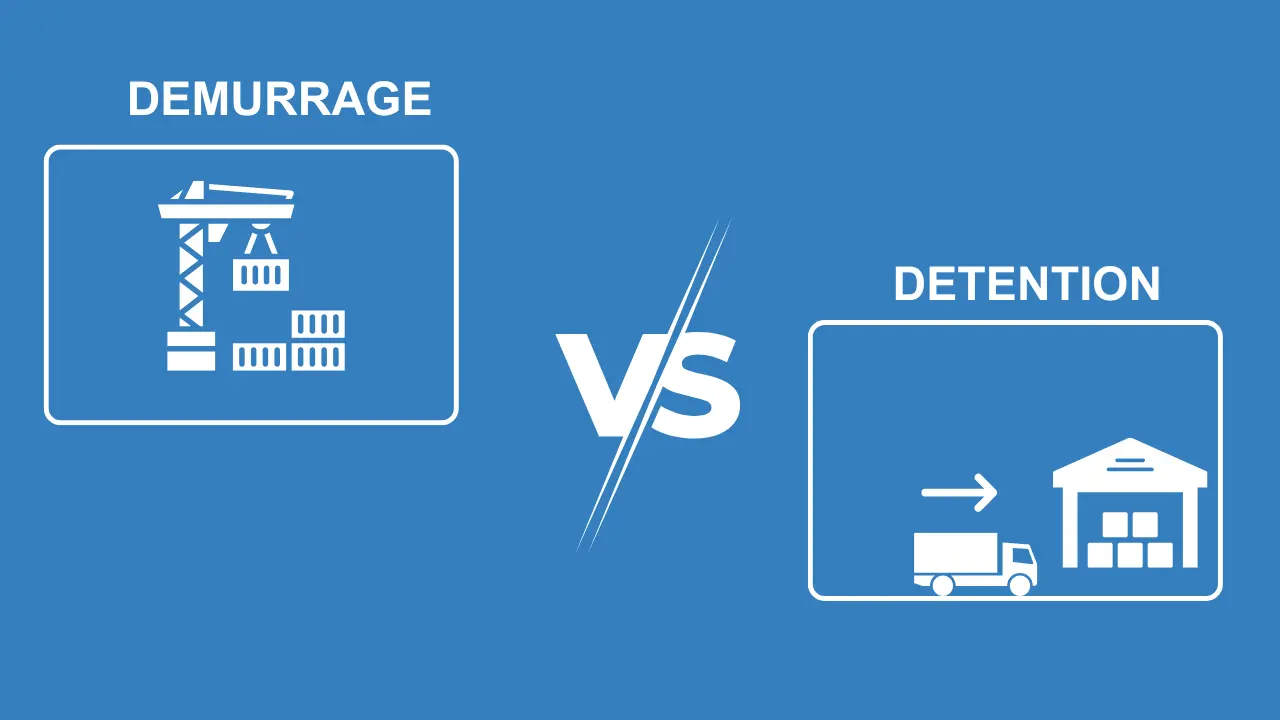
Demurrage occurs within the harbour. When your holder comes and is unburdened by the ship, a free moment is provided to pick it up. However, if you do not remove it within that time frame, the shipping line will begin charging you a daily fee. Demurrage refers to the amount of time your loaded vessel sits at the outstation. It’s similar to paying rent for staying at the harbour for longer than agreed.
Immurement, on the other hand, occurs outside of the harbour. When you pick up the vessel and transport it for unloading, you must return it empty within a specific time frame. However, detainer charges apply if you stretch it out and defend it later. It covers the months that the vessel remains with you after the sanctioned days.
Demurrage and hold charges
When a vessel arrives at its destination, it must be returned to the proper locale, which is commonly an anchorage, terminal, or storage. Shipping lines depend on this alert answer so their holders can move again for the succeeding bundle. The global force chain runs on this nonstop cycle of burst, quietus, and comeback.
Now comes the part that most people avoid: demurrage and detain freights. These are the forfeitures imposed for keeping receptacles for longer than the independent time limit. If your loaded vessel waits in port for a lengthy amount of time before being picked up, demurrage will be levied. However, if you fail to pack the empty vessel back after unloading, you will be arrested.
Demurrage Versus Detention: What precisely is the contrast?
Numerous people mix demurrage with detention. Both produce duplicate costs, but for different accounting purposes. Then we’ll take a short look at demurrage and immurement conflicts.
When and why are you facing demurrage and detention charges?
After the shipping line’s free time expires, you must pay for demurrage and detention. These expenses often arise when anything goes wrong in the process. Let’s investigate what generally causes it.
- Many importers fail to assess their available free time. They can make incorrect assumptions about dates or misunderstand the wording. That minor error leads to serious consequences.
- Shipments have long journeys and involve several participants. Planning gets difficult when you don’t know where your cargo is. As a result, poor visibility might create delays, leading to these costs.
- Late updates or missed warnings might be one of the causes. Assume your vessel is rescheduled and you find out a day before it arrives. That is enough to throw off your pickup schedule.
- A little human error, such as a missed call, inaccurate date input, or internal miscommunication, might also be the cause. Demurrage and detention expenses might appear on your account without your knowledge.
Why are these costs significant for businesses?
Although demurrage and detention appear to be tiny additional charges, they can quickly become issues for a pot.
Costs of advanced shipping: A brief incarceration adds up quickly. A slew of useless days at the harbourage might add up to a high price.
Account imbalance: These counts are usually unplanned, and they can easily raise your shipping costs over what you anticipated.
Delays in deliveries: When holders remain in the harbourage for an extended period of time or are replaced late, the entire delivery process is delayed.
Storage traffic: Delayed holders occupy space designated for replacement weight, causing a lag in lading and unloading labour.
Broken force chain: One holdback leads to another, making customs, transportation, and ultimate delivery all feel the
What is “independent Time” in shipping, and why is it so important?
“Free Time” in shipping refers to the number of days available to pick up, unload, and return a container without compensating for any excess freight. Once this period expires, the shipping firm will begin charging you for demurrage and detention, depending on the circumstances. That is why “free time” in shipping is crucial to your business.
- It saves you money because there are no fines for staying inside during the free time.
- It keeps shipments on schedule. When you handle holders efficiently, your commodities will move fast and on schedule.
- It alleviates space constraints at ports and terminals. Late returns may impede your storage or the final.
How are demurrage and detention fees calculated?
Demurrage and detention costs are assessed based on how long you keep the vessel beyond the free occasion and under what conditions the detention occurs. Several agents pick the ultimate amount you pay.
- Container size: Larger holders, such as 40-bottom bones, have a longer reach than smaller 20-bottom holders. Larger size indicates higher diurnal costs.
- Period of detention: The number of redundant days has a direct impact on overall costs. Charges are routinely increased day to day.
- Every anchorage has its own demurrage and detention policies. Some provide more free time, while others charge earlier.
- Carrier programs: Rates vary across airlines. Some provide flexible free days, while others are rigorous and charge each day.
How to avoid demurrage and detention charges?
No bone enjoys paying unnecessary freight, especially bones that might have been avoided. So, here are some strategies for reducing demurrage and detention freights.
- Plan ahead of time and remain aware. Proper planning saves time and money. So, keep your troops on edge about how demurrage and detention work. When everyone understands the laws and timelines, detainments are less probable.
- Keep track of the payload. Always keep track of your vessel’s whereabouts. Real-time shadowing allows you to see detentions before they become pricey.
- Prepare documents along the trip. Missing or incorrect paperwork may create delays at customs and result in detention. So, before the vessel arrives, you must confirm that all documentation is complete and correct. Quick concurrence implies no waiting and no excess items.
- Communicate with everyone involved. Maintain contact with the shipping line, harbour, and agents. Clear communication keeps everyone on track and avoids costly misunderstandings.
Key Takeaways
- Demurrage and detention are two separate marine freight terms that refer to holdbacks that exceed free time.
- When your heavy vessel is in the harbour for a lengthy period of time, demurrage is applied.
- Detention occurs when you celebrate the vessel outside of the port for a lengthy period of time.
- These fees may increase your overall delivery expenses and reduce profit margins.
- These fees are usually decided by the vessel’s size, the number of extra days, harbourage restrictions, and carrier policy.
Conclusion
Demurrage and detention are two separate shipping goods terms that apply to detentions that exceed the free time. Understanding the distinction between detention and demurrage may allow you to better manage your time and expenses. Keeping track of “free time,” checking consumption, and being watchful are all simple methods to save your firm money and avoid unwanted costs.