

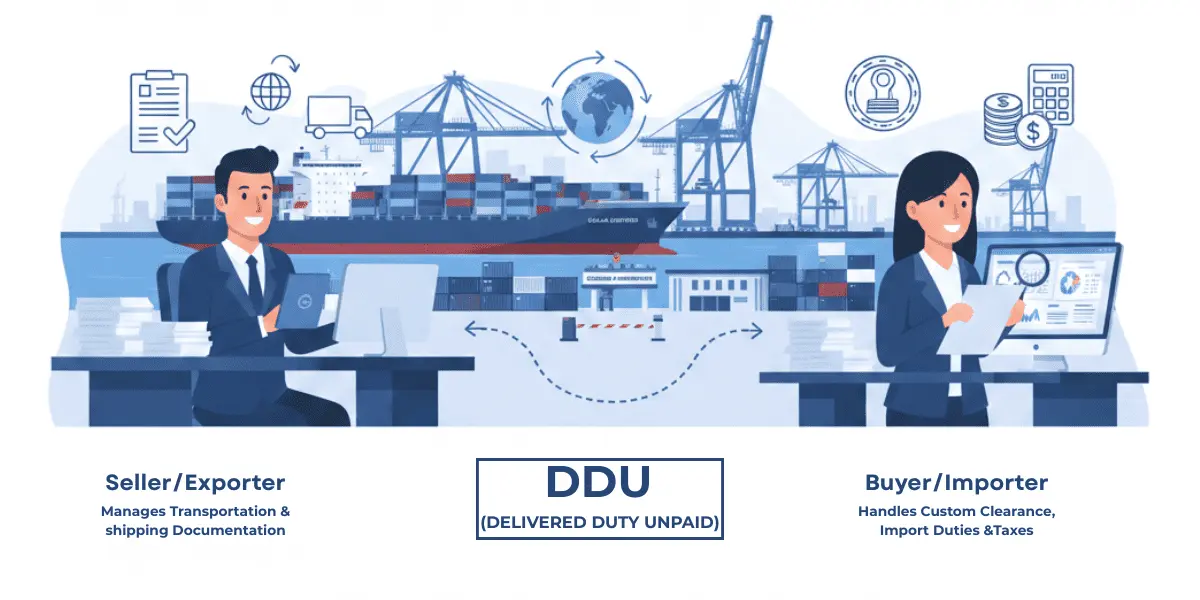
In international trade, merchandisers and buyers are always calculating shipping conditions to decide who pays what. DDU dispatching phrases are a similar term. In shipping, DDU refers to Delivered Duty Unpaid. This arrangement enables the dealer to transfer goods to the buyer’s country, but excludes import charges and other impositions.
The DDU incoterm was previously part of sanctioned trade restrictions; however, it was later replaced. People continue to use this term in shipping trades. It is vital that you understand what DDU is, how it affects exporters and importers, and how it differs from other shipping terminology.
What is DDU in shipping?
DDU stands for Delivered Duty Unpaid. It’s an ancient commercial phrase that was originally included in Incoterms. Under this agreement, the dealer is responsible for transporting the merchandise to the agreed-upon location. The merchant also covers the transportation fees and bears the responsibility till the goods arrive.
Once the items reach the buyer’s area, he or she is responsible for paying customs duties, impositions, and any other originating charges. This is why it is referred to as “duty overdue.” The dealer delivers the merchandise, but the consumer is responsible for customs clearance and payment.
Since 2010, DDU has been deleted from the sanctioned Incoterms list. However, this term may still be employed in global trade. It works similarly to conventional delivery agreements, with the dealer and buyer’s locations clearly marked.
Seller responsibilities under the DDU
Under DDU, the dealer has an important role in the delivery process. In DDU shipping, the dealer pays the majority of the duties until the goods arrive in the buyer’s country. Also, the important scores.
Preparing goods: The dealer prepares the merchandise in accordance with the contract and attaches the appropriate papers.
Complete the import concurrence: Before the commodities leave the country, the merchant fulfils customs regulations.
Arranging transportation: The merchant arranges and pays for the primary transportation used to deliver the merchandise to the stated destination.
Accepting Responsibility During Vehicle: The dealer bears the risk of loss or damage until the products arrive at the agreed-upon location.
Passing out transit papers: The dealer supplies the consumer with the transportation papers so that they may collect the merchandise.
Buyer’s responsibility under the DDU
DDU shipping requires the buyer to accept responsibility once the items arrive at their destination. DDU Incoterms requires the buyer to manage tariffs, impositions, and other original conditions. The key tasks of the buyer are listed below.
Paying for the products: The buyer completes the payment as stipulated in the sale contract.
Arranging import concurrence: The buyer handles the initial customs, permissions, and authorisations required to bring in the products.
Taking Delivery: When the products are delivered to the agreed-upon location, the buyer gets possession of them.
Accepting difficulty at the destination: The buyer is responsible for the products after they arrive at their destination.
Covering original charges: The buyer pays import duties, impositions, and other original transport costs related to the weight.
Advantages of DDU in shipping
DDU shipping gives further control to the buyer once the goods reach the destination country. It also reduces the dealer’s burden for original formalities. Some of the pivotal advantages are
Further control for the buyer: Buyers can manage original customs and keep track of the cargo process.
Further cost operation: Buyers know their country’s rules, so they can control charges more effectively.
Easier shadowing: Buyers stay streamlined about shipments and handle them as per their original system.
Lower responsibility for the dealer: The dealer only delivers the goods to the agreed destination and avoids original formalities.
Disadvantages of DDU in dispatch
While DDU Incoterms provide buyers additional leverage, they also pose significant risks. These difficulties may affect both customers and merchandisers. Some of the disadvantages include
Unexpected chores and impositions: Buyers may face unexpected expenses at customs, which might generate issues.
Detentions and crimes in paperwork or customs processes may result in delivery delays.
Possible difficulties: Buyers may be offended by the additional costs at the time of delivery and refuse the cargo entirely.
Key takeaways
In shipping, DDU stands for Delivered Duty Unpaid.
- DDU shipping was once a sanctioned Incoterm; however, it was replaced in 2010.
- DDU involves the dealer paying for transportation up to the agreed-upon site.
- Buyers are always liable for import duties and original impositions.
- DDU gives consumers more control over their initial expenditures and procedures.
Conclusion
DDU shipping terms are no longer part of the recognised Incoterms, although they are still often used in commercial transactions. The DDU Incoterm specifies how responsibility is distributed between the exporter and the importer. The dealer controls transit until the products arrive, and the buyer handles duties and customs clearance.