

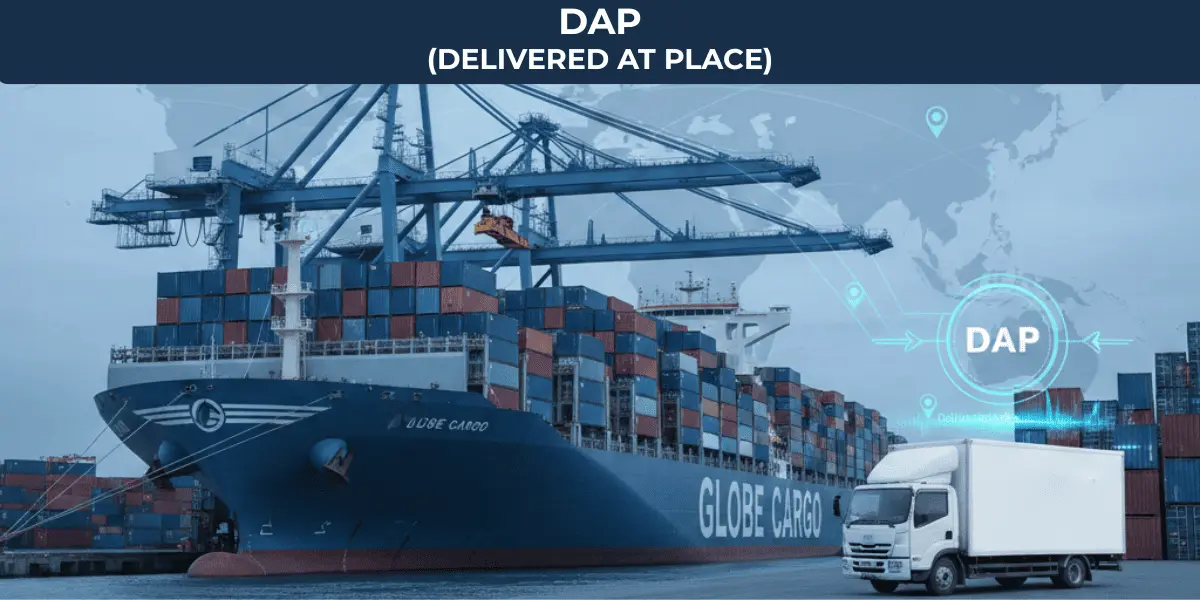
One of the most important questions when purchasing or selling items overseas is: who does what? Delivered at Place, also known as DAP incoterm or international marketable term, is relevant in this situation. To avoid miscommunication between customers and sellers, these words are used in global marketing.
The DAP Incoterms are straightforward: the customer is responsible for any consequences once the dealer delivers the products to the prearranged location. DAP shipping is effective in a wide range of trading scenarios. Businesses worldwide trust it because it is transparent and adaptable. However, if you’re importing a product and want the dealer to take care of the majority of the transportation, DAP is often the option.
This article will walk you through every facet of DAP, including how it works and what the customer and dealer need to do to make sure there are no surprises later.
What does Incoterms DAP shipping mean?
When exporting goods from another country, you can come across the term “DAP.” DAP is delivered to the destination in its entirety. The Incoterms, a set of international shipping terminologies, are the source of this law. Merchandisers and buyers may more easily comprehend who is in charge of what throughout the shipping process thanks to this terminology.
The dealer manages the cargo until it reaches the destination that the customer and dealer have decided upon, according to Incoterm DAP. An office, a storage, or any other preferred area might be that place. The dealer assumes the risk and pays the shipping expenses if something goes wrong during shipping. The buyer doesn’t get involved till the goods reach that final destination.
DAP is often used in shipping for international trade. It can be transported by air, sea, train, or road. The dealer arranges everything, including international shipment, packing, and loading. But as soon as the package reaches its destination, the buyer’s job begins. The buyer is responsible for handling customs, import taxes, and unloading.
Several merchandisers and purchasers under Incoterms DAP
Under DAP shipping, both the dealer and the client have specific duties to fulfil. These places are easily divided, so there are no misunderstandings throughout the import process.
What responsibilities does the dealer have?
The dealer handles the merchandise till it reaches the intended destination. The dealer then takes care of that under DAP terms in import:
- Transportation to the Port: The dealer is responsible for paying for the items’ transportation from their location to the harbourage of departure.
- Export Customs: The products are cleared for import by the dealer. They organise papers such as the tab and bill of lading.
- Shipping to Destination Country: To transport the products to the harbourage of the destination country, the cost covers the majority of the shipping costs.
- Optional Insurance: The dealer may still guarantee the items while they are being shipped, but insurance is not required.
- The dealer retains the threat until the products arrive at their destination.
What responsibilities does the buyer have?
The buyer’s involvement begins as soon as the items arrive at the specified place. The consumer is responsible for it under DAP shipping:
- Clearance and Import Duties: The customer is responsible for handling customs in the country of destination. This includes charges, taxes, and freight.
- Disburdening: The consumer arranges and pays for the items to be disburdened at the designated location.
- Transport additional: If the items need to be moved outside the delivery area, it is the buyer’s responsibility.
- Threat After Delivery: The client is responsible for any threat that develops after the dealer delivers the goods.
How does the Delivered-at-Place (DAP) shipment method work?
The dealer and the buyer might be in separate countries or in the same country. Trade restrictions are still crucial in either scenario, and DAP shipping might be helpful. This is one of the Incoterms used in import transactions. These terms outline what has to be done on both sides.
On DAP conditions, the dealer does most of the work in importing. They handle import documentation, packing, loading, and shipping. They also manage import blessings. The dealer covers the costs and threats till the items reach the agreed-upon destination.
The buyer’s role begins after the goods are delivered. The buyer is responsible for paying for unloading in addition to managing the customs process in the destination country. This includes levies, import taxes, and any associated documentation.
DAP shipping is available for all modes of transportation. It doesn’t matter if the goods are shipped by truck, train, aeroplane, or boat. Writing down the dealer’s item delivery location is easy. “Delivered at Place, Port of Dubai” is one instance. In short, after the dealer delivers the goods to the customer’s location, the buyer controls the consequences.
DAP’s advantages and disadvantages for shipping
As a customer, you may clearly profit from DAP shipping. However, there are other drawbacks as well. Let’s examine the incoterm DAP on both sides:
Benefits:
Unambiguous Cost Division: Each party is well aware of what they are paying for. Everything is covered by the dealer until the products arrive at your location. Costs are only paid by the customer after delivery.
Reduced danger while shipping: Until the payload gets to you, the dealer manages the threat. This implies that the customer will not suffer a loss if something goes wrong during transit.
Improved Cash Flow: The buyer is not required to make an outright payment. In certain transactions, the buyer is only able to pay once the items are delivered.
Reduced Stock and Quicker Delivery: The buyer does not always have to stay in order to get the payload from another nation. This allows the buyer better control of force while saving space.
Disadvantages:
Delays in Customs: Once the items arrive in the target nation, the buyer is responsible for handling customs. However, if there is a detention, it delays delivery.
Extra Fees After Appearance: The buyer shall cover storage or late goods if there is a delay in unloading or concurrence.
Advanced Total Cost of Shipping: The entire shipping cost may be paid in advance as the dealer manages the remaining steps of the procedure.
Dealer’s charges and threat: The dealer may want a deposit or a redundant payment. They take this action to protect themselves if you refuse to pay import taxes.
Where is DAP frequently used in international trade?
DAP shipment is used in a lot of trading situations. As a result, both the buyer and the dealer become inflexible. Because of this, it fits well in several packaging:
- Used for all forms of transportation: One significant benefit is that Incoterms DAP applies to air, sea, road, and rail. Both the consumer and the dealer may decide on the best option based on variables like price, time, or location.
- Ideal for Breakable Things: DAP is frequently used while transmitting sensitive data. The dealer keeps control until delivery in order to take additional safety measures and avoid damage during the trip.
- Sometimes helpful for hard-to-reach requests, purchasers lack robust logistical systems. Because they can manage the whole journey and ensure that the items arrive at the correct location, merchandisers choose Delivered At Place, or DAP, in certain situations.
- Beneficial for Multimodal: Transportation DAP functions best when commodities go via many modes of transportation, such as train to air or ocean to road.
Key Differences of DAP with Other Incoterms
DAP shipping is distinct from a lot of other Incoterms. When comparing DAP with DDP and CIF, there are several important distinctions to be aware of, but it allows the seller greater control throughout transportation.
DDP (Delivered Duty Paid) vs DAP
- All costs, including import taxes and levies, are covered by the dealer in DDP. The products are delivered by the dealer when they have been fully cleared by customs.
- In DAP, the dealer does not manage customs clearance; instead, they transport the items to your location. After the products arrive, the customer is responsible for paying the import fees and levies.
CIF (Cost, Insurance, and Freight) vs DAP
- Only inland or oceanic water transportation uses CIF. In CIF, once the items are placed aboard the boat, the dealer transfers the risk to the customer while covering the cost of transportation and insurance.
- DAP applies to all modes of transportation, including rail, air, sea, and road. Until the products arrive at their destination, the dealer maintains the threat.
Key Takeaways:
- Delivered at Place or DAP Incoterm describes a scenario where the dealer handles all shipping up until the items reach the buyer’s location.
- Customs clearance, import taxes, and unloading under DAP shipping are the customer’s responsibilities after delivery.
- Because DAP is compatible with a variety of transportation methods, including air, sea, land, and rail, it is flexible for international commerce.
- By bearing full threat and expense till delivery, merchandisers give customers additional security during transit.
- In terms of threat, customs duty, and shipping method, DAP is different from DDP and CIF.
Conclusion
DAP shipping makes international trade clearer. It indicates who is in charge of what portion of the journey. The dealer oversees transportation up to the delivery location. After that, the buyer handles disbursement and customs. If you want to ship with the least amount of risk, this is a smart option.