

Have you heard about DDP for shipping? If you trade or purchase internationally, you’ve most certainly heard of it. DDP (Delivered Duty Paid) alters the allocation of costs, risks, and duties between the dealer and the consumer. In fact, among all the Incoterms or transnational marketable terms, the DDP Incoterm imposes the most hardship on dealers. That is why many e-commerce businesses and customers are keeping a close watch on the situation.
What precisely does DDP mean in shipping?
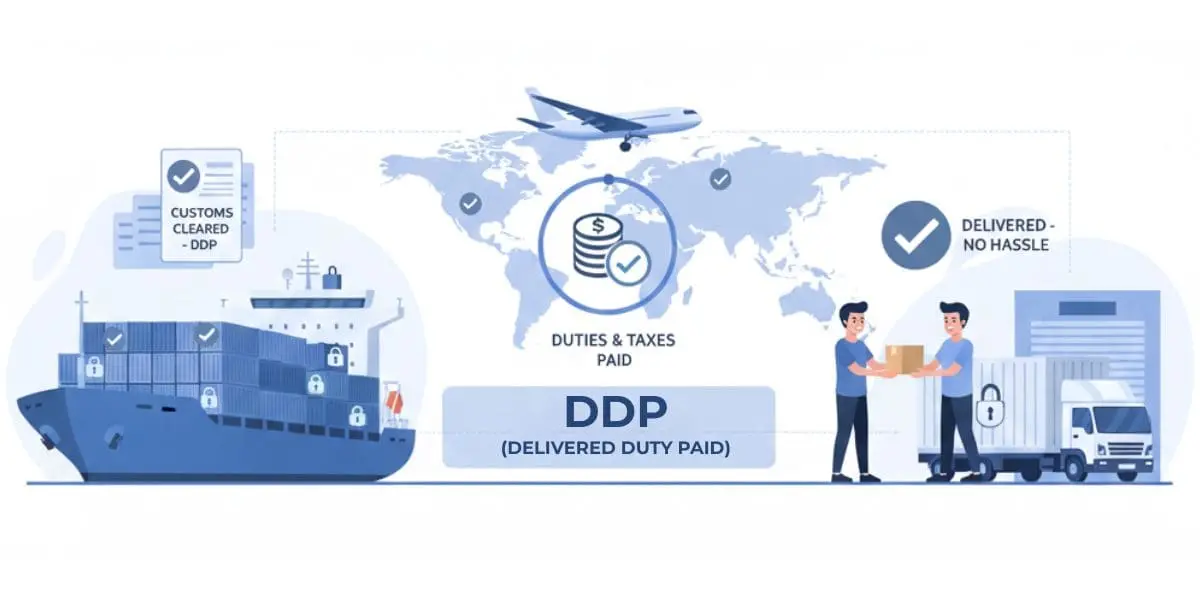
DDP (Delivered Duty Paid) is a shipping phrase. Under this arrangement, the dealer retains total control over the product until it reaches the buyer. The dealer pays for shipping, customs, and levies, and the buyer just needs to be present at the final destination to get the merchandise.
DDP Incoterms are one of the criteria developed by the International Chamber of Commerce. These standards specify how buyers and merchandisers share obligations in global trade. Under DDP, the dealer carries nearly all of the responsibility. The dealer clears customs, pays import and shipping costs, and protects the products until they arrive at the agreed destination.
Working in DDP
The specified position is an agreement between the consumer and the dealer. It might be a storage facility, an office, or another location designated for delivery. In summary, DDP means that the dealer handles the entire procedure while the buyer merely pays for the goods.
DDP shipping means the dealer handles the entire procedure till the products reach you. The dealer pays for shipment, organises insurance, and processes products through import and export customs. The dealer also manages duties and fees.
The dealer ensures that the goods reach the predetermined location in the destination nation once they have left the country of origin. This might entail drafting paperwork, talking with customs officials, and overseeing delivery. Without having to pay more for appearance, the customer receives a payload that is prepared for discharge.
Seller responsibilities under DDP
When it comes to DDP shipping, the dealer is fully liable for the entire cargo. These are the primary tasks that the dealer must fulfil.
- Arranging transportation: The dealer is responsible for coordinating the flow of items from the point of origin to the final destination country.
- Manage your insurance: The dealer buys insurance to protect the merchandise on the voyage. This ensures that the buyer receives the cargo securely and without traps.
- Packing the merchandise: The dealer correctly packs the merchandise so that it remains safe throughout delivery.
- Paying import fees: The merchant is responsible for paying any customs or taxes levied by the exporting country.
- Clearing customs: The merchant is responsible for customs in both countries. This involves completing documentation and following import and export procedures.
- Delivering the products: The dealer ensures that the shipment reaches the correct destination. Depending on the arrangement, the final stage may be unloading.
Buyer’s responsibilities under DDP
When compared to other business arrangements, the buyer’s involvement in Delivered Duites Paid is minimal. The dealer does the majority of the job, with the client managing only a few aspects.
- Accepting the delivery: The buyer must be willing to accept the delivery at the location mentioned in the agreement.
- Disburdening goods: When the goods arrive, the client is responsible for removing them from the vehicle. Typically, this is the buyer’s entire physical obligation.
Why do e-commerce sellers use DDP?
Delivered Duty Paid (DDP) shipping is widely used by e-commerce companies for international transactions. They can win their clients’ confidence and avoid delivery issues. Let’s look at its importance.
- Consumer confidence: The guests feel safer when there are no outstanding costs at the time of delivery. Since they pay the whole quantum and keep the goods, they aren’t concerned about paying customs duties.
- Safe delivery: The dealer oversees the entire procedure. They elect calculable routes, handle customs, and execute duties. This lowers the risk of damage or detentions during payload.
- Transparent shopping know-how: Buyers may view the whole cost of their array at checkout, with no fresh freight costs added thereafter. This makes online embraces more convenient.
- Global reach: DDP shipping enables retailers to target other nations. When shipping is forthright, overseas guests are also inclined to buy.
Key Takeaways
In shipping, DDP stands for Delivered Duty Paid:
- Under the incoterm DDP, the merchant is responsible for nearly all costs and pitfalls.
- Shipping, insurance, levies, and customs authorization are all covered by DDP.
- For DDP quietus, the buyer’s responsibility is confined to lading and disburdening goods.
- DDP provides the most accessible shopping experience when compared to DDU and DAP.
Conclusion
DDP shipping promotes translucency in transnational trade. The dealer handles shipping, fashions, and levies; the client is solely responsible for entering and disposing of the products. This distinct division of liabilities prevents misconstructions and gratuitous costs.
DDP is one of the simplest styles to do business abroad. By streamlining the procedure and making international orders facile for both parties, it boosts confidence in all cross-border deals.