

When selling or purchasing anything overseas, you must observe Incoterms. These rules describe who pays for transportation, customs, and duties. They also clarify who bears responsibility at each level.
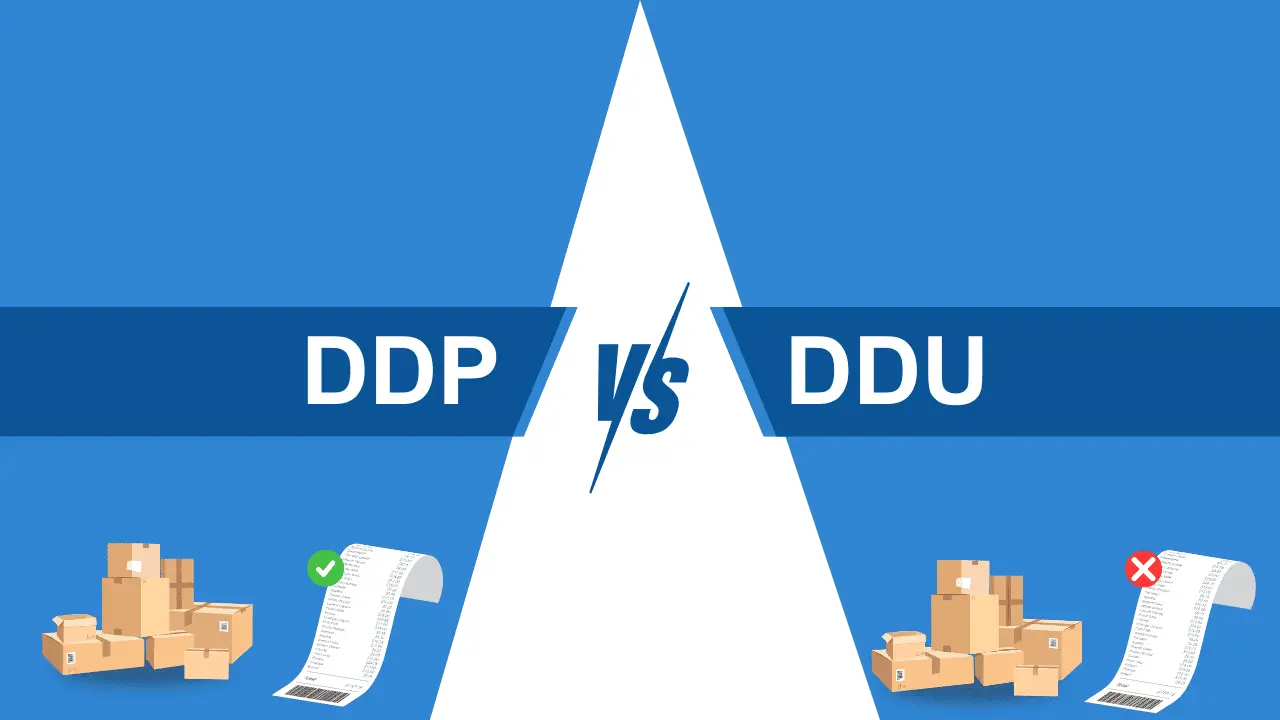
However, whether you are an exporter or importer, you must be aware of these incoterms. They influence the cost, control, and transportation of your goods. DDU and DDP are among the most often used Incoterms. Many businesses blend these two. In this essay, we will look at the distinction between DDP and DDU in shipping.
What Does “DDP” Mean in Shipping?
DDP stands for Delivered Duty Paid. This word places the highest amount of responsibility on the seller. If you are the dealer, you are responsible for almost everything until the products reach the buyer’s location. It shows that you deliver items to the customer and pay for taxes, levies, and customs clearance. The buyer just gets the stuff.
What Does “DDU” Mean in Shipping?
DDU stands for Delivered Duty Unpaid. This phrase imposes additional duties on the purchaser. If you are the seller, you are solely responsible for shipping to the buyer’s country. The buyer is responsible for tariff and import compliance. It implies that you deliver goods to the buyer’s location without incurring import taxes or levies.
Dealer and buyer scores under DDP
The obligations of a dealer and a buyer in DDP shipping are briefly described here.
Dealer scores
- Arranges for transportation.
- Pays freight charges.
- Manages imports and import concurrency.
- Pays customs, Handbasket, or GST.
- Delivers products directly to the buyer’s door.
Buyer Scores
- Accepts the products.
- In some circumstances, payments are made for disbursement.
- Provides import documentation as required by the original law.
Dealer and buyer scores under DDU
In DDU, the buyer has additional responsibilities than the vendor. The liabilities of both are detailed below.
Dealer scores
- Arranges for transportation.
- Pays for import competition.
- Delivers products up to the designated spot.
Buyer Scores
- Handle customs clearance at the destination country.
- Pay import tariffs, handbasket, and other fees.
- Take care of disbursing charges.
DDP vs DDU: A Key Difference
The phrases DDU and DDP describe who pays for what. The primary difference is in import tariffs and customs. Here’s a straightforward table to help you notice the contrast:
|
DDP (Delivered Duty Paid) |
DDU ( Delivered Duty Unpaid) |
| The vendor is responsible for paying customs charges. | Buyers are responsible for paying customs charges. |
| Import taxes are paid by the vendor. | Import taxes are paid by the customer. |
| The vendor assumes responsibility for the possibility of customs delays. | In DDU, the customer assumes the risk of customs delays. |
| The supplier has greater influence over DDP than the customer. | The buyer has greater influence in this situation. |
The benefits of Delivered Duty Paid
The advantages of delivered duty paid (DDP) are discussed below:
- The buyer is pleased with the smooth delivery.
- The dealer establishes confidence with the buyer.
- Suitable for novice purchasers who need customs expertise.
- Reduced the likelihood of items becoming stuck at customs.
Disadvantages of Delivered Duty Unpaid
When delivering under DDU, the customer has to accept various drawbacks. The disadvantages are outlined below:
- Buyers may be held if they do not have the required documentation.
- The buyer pays tariffs separately, which may raise expenditures.
- Controversies may emerge if the client considers the expenses to be exorbitant.
- Buyers who have no prior import expertise may face additional challenges.
DDP vs. DDU Pitfalls:
When shipping DDP or DDU, merchandisers and buyers should be aware of several possible issues:
In the DDP:
- The dealer may overestimate their responsibility.
- Customs laws might change rapidly.
- If there are any missing documents, delivery may take longer.
In DDU:
- The buyer may fail to complete paperwork on time.
- Customs can hold up goods.
- Unexpected duties may cause problems for the buyer’s budget.
Tips for E-commerce Businesses that Use DDP and DDU
DDP and DDU management help e-commerce enterprises avoid uncertainty, decrease detentions, and ensure smooth international shipping processes. The following are some pointers for e-commerce enterprises employing DDP and DDU:
- Check the rules of the nation to which you are sending your package.
- Determine ahead of time who will pay for duties and levies.
- To build trust with new visitors, provide DDP.
- Charges should always be explained before shipment.
- Track your cargo and upgrade the buyer.
Key takeaway:
- DDP (Delivered Duty Paid) refers to the dealer covering almost all charges.
- The full term of DDU in shipping is Delivered Duty Unpaid, which means that the buyer pays import charges and levies.
- Under Incoterm DDP, the dealer is responsible for import, import, and final delivery.
- In DDU shipment, the customer is responsible for import concurrence and costs.
- Clear usage of DDP and DDU eliminates conflicts and promotes better trading relationships.
Conclusion
DDP and DDU are two often used Incoterms in worldwide trade. Both determine how expenses and risks are addressed. In DDP, the dealer pays for everything up until delivery. In DDU, the buyer is responsible for taxes and customs. Each has its own advantages and disadvantages. Your company role and experience will determine the best option.
Some people like to have their purchases delivered to their home without any unnecessary complications. Others prefer to handle chores on their own. Choose the bone that best suits your company model from DDP or DDU. Finally, clear terms lead to more efficient trading and more confidence.
1 comment on “DDU vs DDP in international shipping ”