

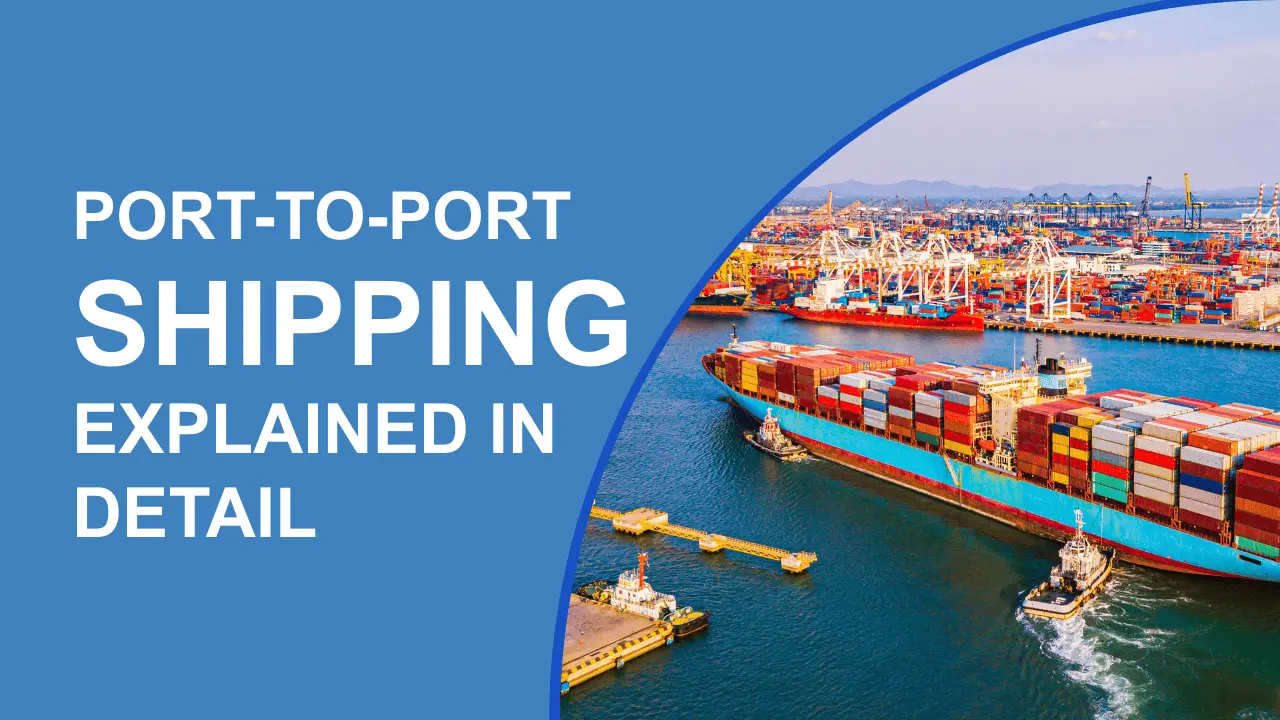
Port-to-Port shipping is the blue route that connects two harbours and serves as the basis for transnational trade. It is where items are lumbered from one float to another before being freed from the anchorage. Many exporters and importers prefer it because it provides control, saves money, and keeps the process clear.
What exactly is the definition of port-to-port shipping?
In its most basic form, harborage-to-harborage shipping is the movement of products from one seaport to another. This does not cover transportation from the warehouse or quietus to the buyer’s doorstep-just a blue voyage between two harbours.
The harbour-to-harborage interpretation centres entirely on the blue leg of transit, which involves loading items into the boat at Fountainhead and unloading them at Destination. Everything preceding and following that, such as trucking, warehousing, and customs, is under your control.
In harborage-to-harborage transportation, the shipper ensures that the shipment arrives at the cargo harbour, where the buyer takes control. Companies that formerly handled inland logistics are still eliminating this structure. It permits them to retain control over Commonwealth employment and levies.
This route is often utilised for both FCL (full container cargo) and LCL (less than container cargo) shipments. In harbourage shipping, you merely pay the shipping company for ocean travel and bear all additional expenditures.
How does port-to-port shipping work?
The technique for harborage-to-harborage shipping is basic, and each of these ways is crucial for moving goods from one port to another.
Weight preparation: The weight is packed, tagged, and ready for import. You confirm that the commodities meet all shipping and safety regulations. Proper treatment eliminates future detentions, and this step provides the framework for a safe harbourage shipping route.
Transfer to the port of lading: When the weight is ready, it is transported to the loading port via exchanges or camps. The articles are checked, counted, and kept in a storehouse until the vessel is ready to board.
Loading and weight departure: Loading is the next step. Large cranes are employed to raise and precisely install the holds on the boat. After loading, the boat leaves on its ocean trip.
Cargo in transport: The ocean journey is the last element of harborage-to-harborage shipping. The boat transports the holders across international waterways.
Arrival at the destination’s harbour: Unloading commences as soon as the vessel arrives at its destination. The holders are transported from the boat to the harbourage area. Customs personnel review the documentation and release the items for harbourage delivery.
Inputting the weight: This is the last stage, in which the consignee or their agent retrieves the cargo from the destination harbour.
Benefits of Port-to-Port Shipping:
Every company seeks smarter methods to move goods. Port-to-Port shipping is generally a sensible choice. That is why many firms choose it over full-service options.
A cost-effective choice: In harborage-to-harborage shipping, you just pay for the ocean leg. There are no intermediaries or extra inland charges, which saves you a substantial amount of money on overall transit expenses. Many firms used to handle their own ground logistics, so paying for door-to-door or delivery made little sense. Harborage-to-harborage shipping lets you save money while transporting your weight across the ocean.
More control over trip: In harborage-to-shipment, you decide who handles your payload at both anchorages. You may choose the driver, warehouse, and even the clearing agent. That means you, not the shipping line, stay in command. In addition, if there are any unexpected delays or changes, you may move swiftly because the process is on your terms, which is a significant logistical benefit.
Operational rigidity: Every company has a unique technique of processing commodities, and harborage-to-harborage shipping allows those procedures to be easily modified. You may mate with your chosen original agents, change routes, and even tweak timetables as needed.
Ideal for big or regular shipments: This strategy is best suited for businesses that transmit large volumes or regularly. The method repeats in a predictable pattern (cargo, passage, discharge), making it perfect for monitoring in industries like automotive, retail, and manufacturing.
Transparent and simple to track: When you manage a chunk of the process yourself, you get closer to the goal. Tracking updates, encouraging concurrences, and schedules are still accessible to you. This transparency inspires confidence since you always know where your payload is and when it will arrive.
Services mostly include port-to-port shipping
Port-to-harborage shipping may appear to be limited, yet it nevertheless provides several critical services that enable ocean travel. The services offered in harbourage shipping include
- The first and most annoying element is the vessel’s size. When you pick harbourage shipping, you are assured a spot on the vessel. It might be for the entire vessel if you have enough weight, or for a specific portion if you have less cargo.
- Shipping without documentation is unsolvable. As a result, this service includes important documents, including the bill of lading, ocean waybill, and weight overload.
- Port freight running is also provided as a standard service in harbourage shipping. Once your products arrive at the harbour, cranes and dock equipment take over. The same thing happens when they arrive at their target harbourage.
- Several carriers keep you updated when the ship is at sea. You provide updates on the boat’s location, expected arrival, and any potential detention.
Important factors in Port-to-Port shipping
Port-to-harborage shipping provides you with flexibility and control, but it also has numerous consequences that must be carefully planned for. Let’s go over the key elements that have captured your attention.
Plan an inland excursion: You must arrange for transportation to convey the items from your location to the loading harbourage, and then from the destination harbourage to the final destination. It might be a transaction, a train, or both.
Keep an eye on the harbourage time: Anchorages have established work hours, sailing schedules, and leave rules. So, before transferring your payload for port shipping, check the timing and cut-off dates. Missing them may result in significant demurrage or storage freight charges.
Handling Customs Procedures: When shipping from one port to another, you are in charge of customs clearance. Import documentation must be filed at the loading port, followed by import paperwork at the destination.
Protecting weight with insurance: Ocean shipping poses severe risks, including adverse weather, water damage, and vessel loss. A good weight insurance policy protects you in case something goes wrong while at sea. As a result, it is advisable to spend somewhat less to avoid a maritime calamity.
Agent and mate coordination: Having dependable agents on both ends might save you a lot of trouble. They handle customs, communicate with harbour officials, and keep you updated on the weight’s situation. Reliable friends ensure that your products are delivered out in a timely way as they arrive.
Key Takeaways
- Port-to-harborage shipping only comprises the ocean portion of the route, which runs from the loading harbour to the destination harbour.
- Cargo goes directly between anchorages.
- Proper attestation and customs clearance are necessary at both ends.
- This method is cost-effective since you just pay for harbourage freight rather than door-to-door service.
- It is appropriate for businesses with large cargoes or frequent import-export transactions.
Conclusion
Port-to-Port shipping simplifies and focuses international trade. It minimises needless taxes and gives you more control over your weight when you travel from one harbourage to the next. By regulating inland transit, customs, and attestation yourself, you may assure timely harbourage delivery and reduce road risks. It is a practical and effective means of managing marine freight for businesses that transport large or frequent cargoes.
1 comment on “Port-to-Port Shipping: Explained in Detail”