

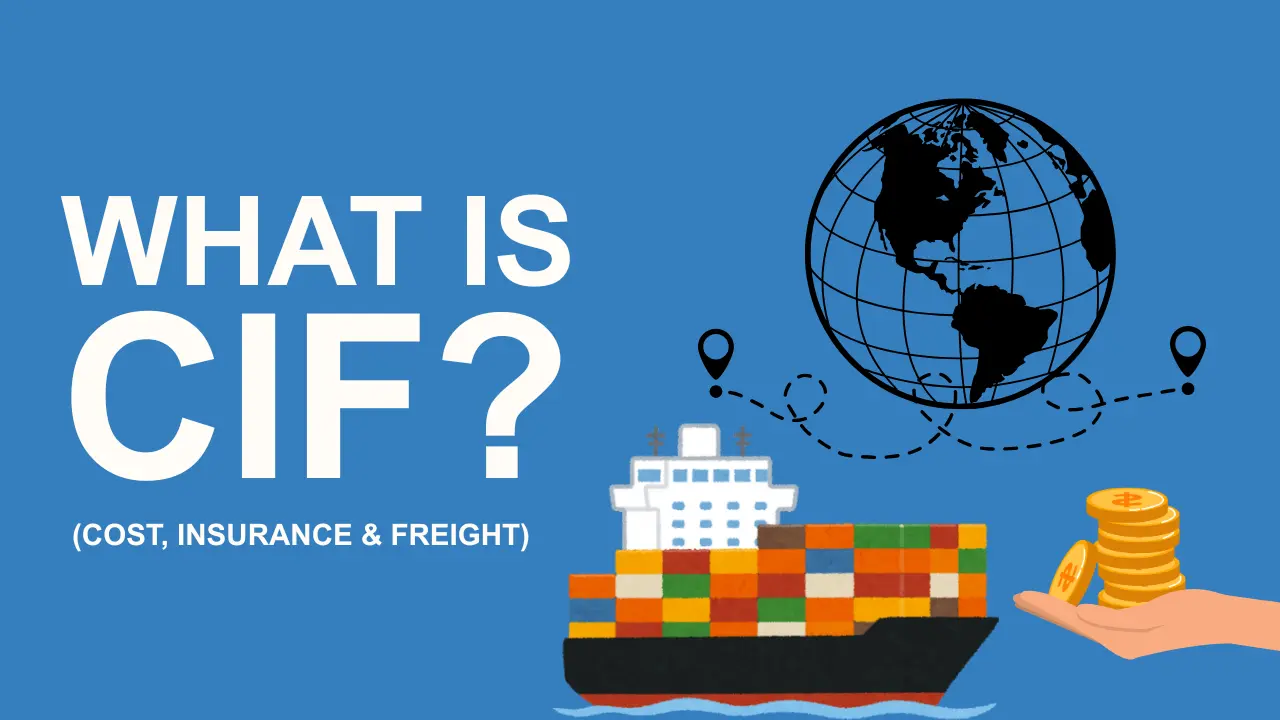
You may have heard of the incoterm CIF if you deal with exports. It is one of the most often used multinational marketing words in maritime shipping. CIF stands for “cost, insurance, and freight.” It clarifies who pays for what when products go across borders.
This blog will teach you all you need to know about CIF, including its definition, dealer and buyer scores, and advantages and downsides.
What is the significance of the incoterm CIF?
In importation, CIF stands for cost, insurance, and freight. It is employed when commodities go by ocean or inland road. CIF requires the dealer to cover the cost of transporting the goods. In addition, the dealer pays for insurance. And the merchant pays the freight to transport the items to the target harbourage.
Once the commodities are placed on the boat, the threat shifts to the purchaser. However, if the items are damaged after that, the buyer is responsible for it. However, the dealer still pays for the freight and insurance till the destination harbourage.
In a nutshell, CIF means that the dealer pays for shipping, insurance, and freight, but the buyer bears the risk once the items are on the boat.
Dealer scores under the CIF
The dealer is responsible for a variety of tasks in addition to pricing, insurance and freight. These responsibilities are stated below:
- The trader obtains the import licence. The dealer is also in charge of any product inspections and packing.
- The dealer pays for the products to be loaded at the harbourage. The merchant will also pay for all import charges.
- The vendor ships the products via ocean or air. The dealer is responsible for the expense of transporting the items to the target harbourage, and the dealer simply pays for insurance until they arrive.
- However, if the items are broken before they reach the boat, the dealer will cover them as well.
Buyer scores below the CIF
When the commodities arrive at their intended harbourage, the buyer assumes responsibility. The buyer’s duties under the CIF are outlined below:
- The buyer is responsible for the items’ release from the boat. The buyer is also responsible for moving objects within the harbourage.
- The buyer arranges transportation from the harbour to the final destination. This includes delivery and unloading.
- Buyers are responsible for paying all import tariffs, levies, and customs costs.
Advantages and disadvantages of CIF shipping
Cost, insurance, and goods (CIF) contain both positive and negative aspects. Let us bandy both sides.
Benefits of CIF:
Buyer has less to manage: The dealer takes responsibility for the shipment and insurance. This simplifies the procedure for the buyer.
Lower threat to the buyer: The dealer is responsible for paying for insurance. However, if the products are lost or damaged during delivery, the customer is not responsible for these costs.
Clear plutocratic interests: Both the dealer and the customer realise who pays for what. This helps with the planning and budgeting of the import process.
Downsides of CIF:
Buyers have less control: The buyer cannot choose a shipping company or system because the dealer handles practically everything
The claim procedure might be difficult: If items are lost or destroyed, the customer is responsible for filing an insurance claim. This method might be sluggish or delicate.
Insurance may not be adequate: The dealer arranges for introductory insurance. However, it will become obsolete if the buyer demands extra material.
Documents Required for Shipping under CIF
Some important documentation is necessary to fulfil cost, insurance, and freight requirements. These ease commodity mobility and the keeping of precise records.
Bill of Loading: It represents a transaction between the dealer and the shipping company.
Marketable Tab: This comprises both the value of the goods and the conditions of exchange.
Quilting Lis: This lists the payload’s contents.
Insurance instrument: This symbol shows that the cargo is covered by marine insurance.
Certificate of Origin: This specifies the country in which the items were made.
Difference Between CIF and FOB
Both CIF and FOB are used in exports, although they impose liabilities on different parties. Let’s look at the distinction between the two names:
| CIF | FOB |
| CIF stands for Cost, Insurance, and Freight. | FOB stands for Free on Board. |
| Under CIF, the seller is responsible for freight expenses. | Under FOB, the customer is responsible for the freight expenses. |
| The seller organises and pays for the insurance. | In contrast, FOB means that the buyer is responsible for insurance. |
| The seller covers the cost of goods, products, items and insurance. | In comparison, FOB means that the buyer is responsible for insurance. |
| The buyer has less discretion over shipping options. | The buyer has a greater choice in selecting services. |
Key Takeaways
- CIF in shipping stands for Cost, Insurance, and Freight and is only used for ocean or inland water transit.
- CIF compels the dealer to pay for freight and insurance until the customer takes possession.
- When the commodities arrive at their intended harbourage, the buyer assumes responsibility.
- CIF allows merchandisers more control over logistics and carrier choices.
- CIF assists buyers by reducing their early shipping responsibilities.
Conclusion
CIF is a reliable standard in worldwide trade. It is apparent who is in charge of expenses, insurance, and commodities. CIF definition in shipping is simplified when the dealer pays for the cargo until it arrives at the buyer’s harbourage. The buyer takes over from there. CIF gives the buyer less control while eliminating early delivery issues.